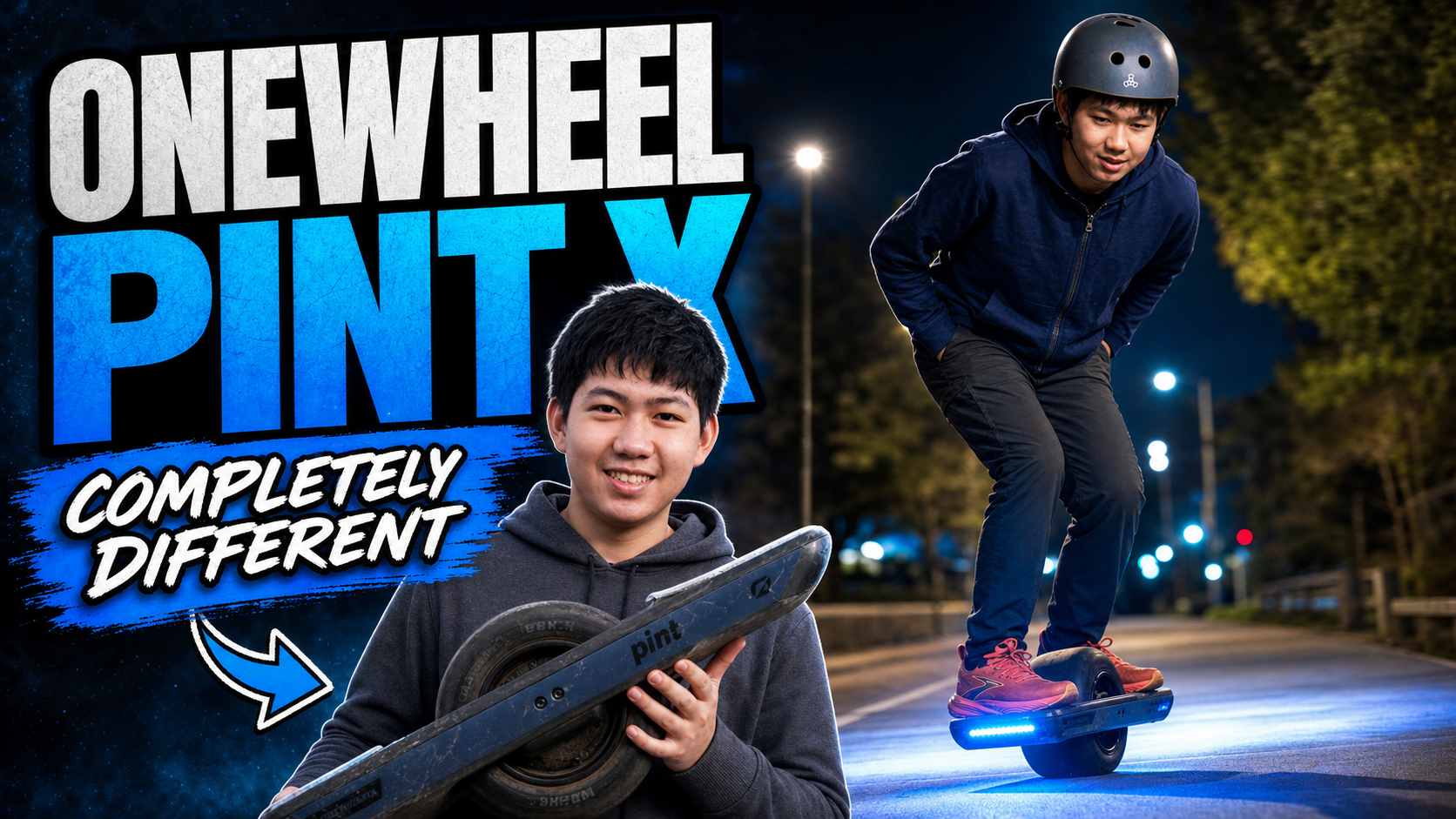
Quick answer: The Onewheel Pint X is the board most people end up with when they're serious about Onewheeling but not ready for the full-size GT. After my first ride — and an unexpectedly cinematic night ride — I think it earns its premium reputation, but only for the right kind of rider. It's not a budget commuter, it's not a trail board, and it's not for people who only care about range-per-dollar. It is, however, one of the most unique riding experiences on the market in 2026. This review covers what's in the box, what surprised me, what hurt, and whether the Pint X is actually worth around $1,400 if you've been on the fence.
▶️ Watch the Full Video Review
I filmed the unboxing, the first ride, and a night session on the Pint X — including the moment the board's self-balancing actually clicked for me. If you're a visual learner, start here:
Trouble with the embed? Watch directly on YouTube →
Like honest gear reviews?
Subscribe on YouTube for real-world California family travel and outdoor gear videos — cameras, kayaks, boards, campsites, and the road trips that put them all to work.
Subscribe on YouTube →The Verdict (Up Front)
Here's my honest take after my first real session on the board:
- Best for: Riders who want a unique, low-impact way to cover a few miles, live somewhere with good pavement, and care about the feel of riding as much as getting somewhere. Also great for creators who want something visually distinctive on camera.
- Not for: Pure budget commuters, riders in bad-pavement cities, or anyone expecting a quick-learning-curve scooter experience.
- Why it works: Real range and top speed in a portable package, premium build quality, a tire-and-self-balancing combination that nothing else replicates, and a night-ride experience that genuinely changes how you think about the board.
- Where it shows the price: Footpad comfort on longer sessions, learning curve on dismounts, and the simple fact that nothing about a Onewheel is "cheap."
If you've been watching Onewheel videos for years, like I had, the Pint X is the most reasonable entry point that doesn't feel like a compromise.
What You Get: Specs & Features
The Pint X sits between the entry-level Pint and the flagship GT in the Future Motion lineup. It's designed for riders who want real range and real top speed without lugging around a 35-pound board.
Here are the spec numbers that matter for most new riders:
- Top speed: up to roughly 18 mph in the appropriate riding mode.
- Range: up to about 12–18 miles, depending on terrain, rider weight, and riding style.
- Hull weight: around 27 lb — heavy enough to feel planted on the road, light enough to grab with one hand and carry to a car or up stairs.
- Tire: the iconic 10.5-inch go-kart-style tire that makes Onewheels look like nothing else on the sidewalk.
- Lighting: built-in headlight and taillight, plus the signature blue underglow that makes the board genuinely fun to ride after dark.
The hardware feels premium. The blue rails, matte deck, and machined wheel hub are noticeably better than anything in the budget PEV (personal electric vehicle) world. There's no fluff in the box — board, charger, quick-start guide, and that's it.
Onewheel pricing, model availability, and exact specs change with each refresh from Future Motion. Before you check out, confirm the current Pint X specs, included accessories, and price on the official Onewheel website for the model and year you're ordering. Don't rely on a single review (including this one) for the board in your cart.
First Ride — Why It Felt Completely Different
I've ridden longboards. I've ridden electric scooters. I've even spent a stupid number of hours on a hoverboard with my kids. None of it prepared me for the Pint X.
Self-Balancing Actually Works
The way the Pint X reads your weight shift and keeps itself level is uncanny the first time you feel it. It isn't "stand on a thing and lean." It's a real conversation between you and the board — you input pressure, the motor responds, you adjust, the board adjusts back. Within a few minutes the entire system stops feeling like a gadget and starts feeling like a partner.
It's Incredibly Quiet
There's no motor whine, no gears, no chain — just the soft hum of a wide tire on pavement. This matters more than people give it credit for. It's the reason Onewheel night-ride videos hit so hard on YouTube; the soundscape is part of the appeal.
The Learning Curve Is Steeper Than YouTube Tutorials Make It Look
Forward and backward are intuitive within minutes. Dismounting gracefully is not. I spent the first 20 minutes of my session learning that the most important Onewheel skill is knowing how to step off without faceplanting. If you're new, find a smooth patch of grass, practice your dismount, and don't be a hero on day one.
Carving Becomes Addictive
Once you stop fighting the board and start working with it, gentle S-turns down a sidewalk become genuinely fun. This is the moment Onewheel riders are always trying to describe to non-riders — and I get it now. There's no way to film what it feels like; you have to be on the board.
Night Ride — The Underrated Experience
Here's the part of the session I didn't expect to be my favorite: the night ride.
The Pint X's soft blue LED underglow makes the board look like it's floating an inch above the pavement once the sun goes down. Add cool night air, empty sidewalks, and bokeh from streetlights blurring past, and you start to understand why so many Onewheel creators are obsessed with after-dark content.
A few practical takeaways from riding after dark:
- Wear reflective gear. The board has its own lights — you don't.
- Don't trust pavement at night. Potholes, sticks, and small curbs that you'd spot easily in daylight become invisible. Your first night ride should be a route you already know in daylight.
- Battery drains faster when it's cold. California nights are mild, but on a chilly ride you'll notice a noticeable hit to range.
- Wear a helmet, every time. Especially at night, especially as a new rider. Cheap insurance.
Real Considerations Before You Buy
To be fair to anyone choosing between the Pint X and a step-up board (or another PEV entirely), here's what I'd want to know before pulling the trigger.
Footpad Comfort on Longer Sessions
The stock footpads are firmer than they look. After about 40 minutes on the board, the balls of my feet were begging for a break. The aftermarket world solves this — Float Life pads are the most popular upgrade for a reason. Plan to add that cost to your budget if you ride often.
It's Surprisingly Stable at Speed
Counterintuitively, once you push past ~10 mph the board feels more planted, not less. The physics of a big inflated tire just work. New riders almost always go too slowly at first; trust the board a little more and the experience gets smoother.
It Does NOT Love Loose Terrain
Gravel, dirt, and sand all make the board feel different — and not in a fun way. The Pint X is at its best on paved bike paths, sidewalks, and smooth roads. For trails or fire roads, you'd want the bigger Onewheel GT instead.
Safety Gear Isn't Optional
Helmet. Wrist guards. Reflective gear after dark. The board is fast enough and tall enough that a bad fall is a real fall. Many cities also require a helmet for PEVs on bike paths or sidewalks. Wear one. Always.
Is It Worth $1,400 in 2026?
At its current retail price of around $1,400 USD, the Pint X is not a cheap toy. You can buy a perfectly good e-bike for that money. You can buy two solid e-scooters. So why does anyone choose a Onewheel?
Honest answer: because nothing else on the market replicates the feeling.
Here's how I'd think about it:
- ✅ Buy it if you want a unique, low-impact way to cover a few miles, you live somewhere with good pavement, and the experience of riding matters as much as getting somewhere.
- ✅ Buy it if you're a creator and you want something visually distinctive on camera. This is one of the most cinematic personal vehicles ever made.
- ❌ Skip it if you only care about practical commuting on a tight budget — buy an e-scooter or e-bike instead.
- ❌ Skip it if you live somewhere with bad pavement, lots of hills with car traffic, or harsh winters.
For me — a dad in California who loves a good evening glide and makes travel videos for a living — the Pint X is exactly the right board. It fits in the trunk, doesn't draw the wrong kind of attention at campgrounds, and gives me a new way to shoot dynamic footage for the channel.
Gear Checklist for Your First Ride
Here's the simple kit I recommend pairing with a Pint X for your first weeks on the board. Affiliate links go to Amazon (I may earn a small commission at no extra cost to you — see the disclaimer at the bottom).
- Skate-style helmet (multi-impact rated): Browse skate helmets on Amazon →
- Wrist guards — the #1 most useful piece of pad gear: See wrist guards on Amazon →
- Knee and elbow pads for the learning phase: Shop pad sets on Amazon →
- Reflective gear and bike lights for night riding: See reflective gear on Amazon →
- Comfortable, grippy shoes — flat-sole, lace-up: Browse skate shoes →
- My full Amazon Storefront for more travel + outdoor gear we actually use: Visit my Amazon Storefront →
- Start on a flat, smooth surface — empty parking lot, school basketball court, low-traffic sidewalk.
- Practice your dismount on grass before you trust it on concrete.
- Keep your knees soft. Locked knees = bad falls. Bent knees = recovery room.
- Don't ride tired. The board is easy when you're fresh and dangerous when you're not.
- Charge fully overnight the day before a big session. Cold + low battery = short ride.
The Gear I Actually Film With
If you watched the video and wondered what I shot it with, here's the kit:
- DJI Mic for clean audio in the wind: DJI Mic on Amazon →
- Main camera: See my camera setup →
- Besnfoto Everyday Carry bag I haul gear in: Besnfoto bag →
- DJI Action 6 for POV and night shots: DJI Action 6 →
- All my DJI gear in one place: Shop DJI →
Plan a Trip Around It
One of the best things about a portable PEV like the Pint X is using it as an excuse to road trip. Beachside boardwalks, smooth-paved state parks, evening sessions on quiet resort sidewalks — all way more fun with a board in the trunk. Here are a few places I'd start (Expedia affiliate links — they help support the channel):
- Stays anywhere: Search Expedia hotels & vacation rentals →
- Vacation packages (flight + hotel bundles): Expedia Vacation Packages →
- Car rental for the board-in-the-trunk crew: Expedia Car Rentals →
- Activities & tours at your destination: Expedia Activities →
- Yosemite base-camp stays: Yosemite area on Expedia →
- Las Vegas (smooth strip rides for days): Vegas stays →
- Hawaii for warm-weather boardwalk sessions: Hawaii on Expedia →
Final Thoughts
The Onewheel Pint X isn't trying to be the cheapest, the fastest, or the most practical personal electric vehicle on the market. It's trying to be the most fun — and after my first ride, I think it earns that claim.
The most useful question to ask isn't "is this the best PEV for the money?" — it's "will this board make me go outside more often?" For a creator dad in California who likes evening glides and cinematic night footage, the honest answer is yes. If that sounds like you too, the Pint X is hard to beat.
Subscribe to Traveling Californian on YouTube
Real-world gear reviews, California adventures, and family travel videos every week.
Subscribe on YouTube →If you pick up a Pint X, tag me on Instagram @traveling_californian or drop a comment on Facebook — I want to see where you took it. Visit the homepage at travelingcalifornian.com for more guides and gear reviews. Float on. — Sid