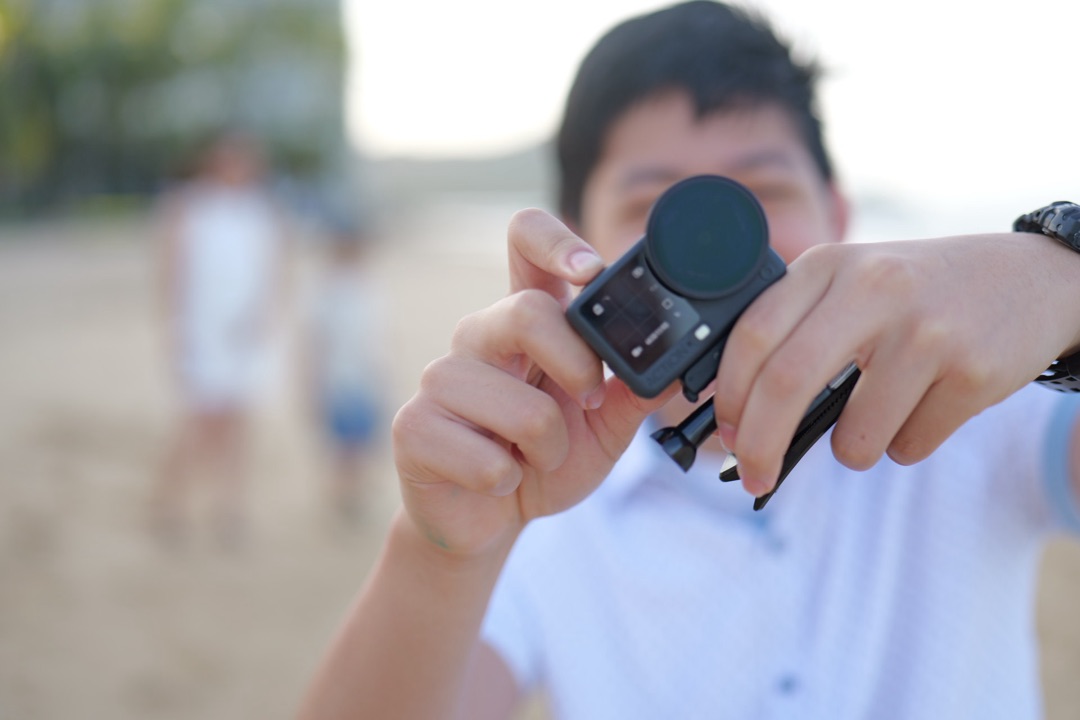
Quick answer: I brought the DJI Action 6 back to Hawaii with one goal — find out if it could be the only camera I pack for a family trip, no mirrorless backup, no phone gimbal, nothing. After beach-side RockSteady tests, a real underwater session, and some genuinely dim indoor footage, my honest verdict is that it gets closer to "only camera" status than any action cam I've traveled with, but there are still a couple of situations where I'd want backup. Here's the full breakdown.
▶️ Watch the Full Video Review
I filmed this one as an actual head-to-head against real Hawaii conditions instead of a studio test — beach glare, saltwater, and low light all in the same afternoon. If you want to see the footage instead of just reading about it, start here:
Trouble with the embed? Watch directly on YouTube →
Like honest gear reviews?
Subscribe on YouTube for real-world California and Hawaii family travel content, plus the camera and gear tests that go with it.
Subscribe on YouTube →The Verdict (Up Front)
Here's the short version if you're deciding whether to buy one before your next trip:
- Best for: Travelers and creators who want one small camera that can handle beach days, pool days, and the occasional dive without a separate waterproof housing.
- Not for: Anyone who needs pro-grade dynamic range in mixed lighting, or shallow depth-of-field "cinematic" shots — that's still a job for a real camera.
- Why it works: Native waterproofing without a case, genuinely effective stabilization, and a bigger sensor that helps more than I expected once the sun went down.
- Where it still shows limits: Very low light gets noisy, and the fixed ultra-wide lens means you can't get a tight, flattering shot of people without walking right up to them.
If you've been debating whether the Action 6 can replace your GoPro and your everyday vlogging camera, keep reading — the underwater section below is where it either wins or loses you.
What You Get: Specs That Actually Matter
DJI's Action 6 is built around a 1/1.1-inch square sensor and a variable f/2.0–f/4.0 aperture — the first action camera to offer an adjustable aperture, which is the whole reason it handles dim rooms noticeably better than older action cams did. Here's what matters for real-world travel use:
- Waterproof to 20m (about 65 ft) with no housing needed at all — this is the headline feature for beach and dive trips.
- 1/1.1-inch square sensor that lets you reframe the same clip to vertical or horizontal after the fact, so you're not filming everything twice for Instagram vs. YouTube.
- Variable aperture (f/2.0–f/4.0) — the sensor lets in more light in dim conditions, which is the biggest practical upgrade over previous DJI action cams.
- 50GB of built-in storage, so a forgotten SD card doesn't end your shoot day.
- 4K/120fps capture with RockSteady and HorizonSteady stabilization working together to keep footage smooth even when you're swimming or walking on sand.
These numbers line up with what independent testers have found as well — the larger sensor and variable aperture combination is a genuine step up for underwater and low-light shooting compared to older action cameras.
DJI updates pricing, bundle contents, and firmware features regularly. Before you check out, confirm the current price, included accessories, and depth rating on the official DJI store page for the exact configuration you're ordering. Don't rely on a single review (including this one) for the unit in your cart.
Beach Test — Does RockSteady Actually Hold Up?
The first real test was simple: walk, jog, and get knocked around by the surf on Waikiki Beach and see if the footage stayed usable. RockSteady stabilization smoothed out normal walking almost completely — no head-bob, no jello effect on turns. Where it got more interesting was in the shorebreak: getting hit by a wave mid-shot is exactly the kind of chaotic motion that used to wreck action cam footage, and the Action 6 kept the horizon level even through that.
The variable aperture also earns its keep here. Direct Hawaii sun at midday is brutal on small sensors — you either get blown-out highlights or crushed shadows. Being able to stop down to f/4 kept the sky and the sand both readable in the same frame, which older fixed-aperture action cams generally can't do.
Underwater Test — No Housing, No Excuses
This was the section I was most skeptical about. DJI rates the Action 6 waterproof to 20 meters with zero housing required, so I took it into the water on a dive session and let it just do its job instead of babying it. Color underwater is the classic weak point for compact cameras — everything trends blue-green as you go deeper — and while the Action 6 isn't going to replace a dedicated dive camera with color-correcting filters, it held onto more natural skin tones and coral color than I expected from a camera this size.
If you plan to go past casual snorkel depth, I'd still recommend the official underwater housing — it extends your safe depth well beyond the no-case rating and gives you real peace of mind in saltwater, even if you don't strictly need it for a shallow reef dive.
- Rinse with fresh water immediately after saltwater use — salt crystals in the seals are the #1 cause of long-term water damage.
- Double-check the battery door and USB-C cap are fully latched before every water entry, every single time.
- Add an ND filter for bright surface shots right before you dive — it tames the glare without you having to fight settings underwater.
- Shoot in the square sensor mode so you can reframe later for both YouTube and vertical shorts from the same clip.
Low Light — Everything In Between
The "everything in between" part of this test happened away from the water, in a dim indoor stop during the same trip — including a walk through the free U.S. Army Museum at Fort DeRussy in Waikiki that we covered in more depth in our Oahu family adventure post. Museum lighting is a classic action-camera killer: no natural light, warm tungsten bulbs, and glass display cases that create reflections. The variable aperture opening up to f/2.0 made a real difference here — footage was usable and only mildly noisy, where a fixed-aperture action cam from a few years ago would have produced a grainy, muddy mess.
It's not perfect — push it into a genuinely dark room with no ambient light at all and you'll still see noise creep in. But for the range of "in between" lighting you actually run into on a family trip (restaurants, museums, golden hour, dusk boardwalks), it's the most usable low light I've gotten from a camera this size.
So — Can It Be Your Only Travel Camera?
After a full trip shooting almost everything on the Action 6, here's my honest breakdown:
- ✅ Yes, if your trip is beach-, pool-, or water-activity-heavy and you want to stop carrying a separate GoPro-style camera and a vlogging camera.
- ✅ Yes, if you mostly post to YouTube Shorts, Reels, or TikTok, where the square-sensor reframing trick genuinely saves editing time.
- ❌ Not yet, if you need shallow depth-of-field, portrait-style shots of people — the fixed ultra-wide lens distorts faces up close.
- ❌ Not yet, if you regularly shoot in near-total darkness — bring a real low-light camera as backup for that specific case.
For a family trip built around beaches, pools, and the occasional museum stop, it covered probably 80% of what I'd normally split across two cameras. That's a meaningful upgrade from where action cameras were even a year ago.
Gear Checklist If You're Buying One
Here's the exact kit I'd pair with an Action 6 for a trip like this one. Affiliate links go to Amazon (I may earn a small commission at no extra cost to you — see the disclaimer at the bottom).
- DJI Action 6 — the camera itself: DJI Action 6 on Amazon →
- ND filter set for bright beach and surface shots: ND filter kit on Amazon →
- Official underwater housing for diving deeper than casual snorkel depth: Underwater housing on Amazon →
- My full Amazon Storefront for more travel + camera gear we actually use: Visit my Amazon Storefront →
The Rest of the Gear I Film With
If you're curious what else was in the bag on this trip alongside the Action 6:
- DJI Mic for clean audio when the Action 6's onboard mic isn't enough: DJI Mic on Amazon →
- Main camera: See my camera setup →
- Besnfoto Everyday Carry bag I haul everything in: Besnfoto bag →
- All my DJI gear in one place: Shop DJI →
Planning a Trip Around It
If beach and underwater footage is the whole point of buying an action camera, Hawaii is about as good a testing ground as it gets. Here's where I'd start planning (Expedia affiliate links — they help support the channel):
- Hawaii stays: Hawaii on Expedia →
- Stays anywhere: Search Expedia hotels & vacation rentals →
- Vacation packages (flight + hotel bundles): Expedia Vacation Packages →
- Activities & tours at your destination, including dive and snorkel excursions: Expedia Activities →
Final Thoughts
The DJI Action 6 isn't trying to be a cinema camera, and it doesn't need to be. It's trying to be the one camera you don't have to think twice about bringing into the water, into the sun, or into a dim museum on the same afternoon — and after this trip, that's exactly what it was for me.
The question I'd actually ask before buying isn't "is this the best action camera on paper?" — it's "will owning this get me to actually film the moments I'd normally leave the good camera in the bag for?" For me, the honest answer was yes. If your next trip involves more sand and saltwater than studio lighting, the Action 6 earns its spot in the bag.
Subscribe to Traveling Californian on YouTube
Real-world gear reviews, California and Hawaii adventures, and family travel videos every week.
Subscribe on YouTube →If you pick up an Action 6, tag me on Instagram @traveling_californian or drop a comment on Facebook — I want to see your footage. Visit the homepage at travelingcalifornian.com for more guides and gear reviews. — Sid